A good leader under pressure is one who can separate their identity from their role, hold or abandon a plan on its merits rather than their ego, and act on rehearsed judgement instead of performed certainty. Pressure does not reward charisma or confidence. It rewards self-knowledge. The leaders who hold are the ones who have done the interior work of knowing what they will do before the moment arrives, and who can stay clear-headed when the plan they built starts to fail.
I spent years in command in the Singapore Armed Forces, in more than two thousand operations where the cost of a poor decision was not abstract. That experience did not give me a formula. It taught me what to watch for. The patterns that separate leaders who hold from those who do not are consistent, and they have very little to do with how impressive someone looks on a calm day.
Why do confident leaders fail under pressure?
Confidence is a poor predictor of performance under pressure because it is often a performance in itself. A leader who has built their standing on always having the answer has a great deal to lose the moment the situation exceeds their plan. The pressure is not only operational. It is personal. They are defending a self-image at the same time as they are trying to read a deteriorating situation, and the two tasks compete.
The leaders who hold tend to be quieter about their certainty. They have already accepted that they will sometimes be wrong, which frees them to notice when they are. Confidence that cannot survive contradiction is brittle. What you want is judgement that can take new information without taking it as an insult.
What are the common failure modes under pressure?
There are three I see repeatedly. The first is freezing: the leader who waits for more information that will never arrive, mistaking inaction for prudence. The second is over-controlling: the leader who, feeling the ground move, pulls every decision back to themselves and chokes the people who could actually help. The third is performing certainty they do not have: projecting calm conviction while privately lost, which buys short-term reassurance at the cost of trust when the gap shows.
Each failure mode is a way of managing fear rather than managing the situation. Naming them matters, because most leaders default to one under load, and the first defence is recognising your own.
How does separating identity from role help leaders hold?
When your sense of self is fused with your role, every threat to the plan becomes a threat to who you are. That fusion is what produces the failure modes above. The leader who cannot separate identity from role cannot abandon a failing course of action, because abandoning it feels like admitting they are a failure.
The leaders who hold have done the work of knowing themselves apart from the title. They can lose an argument, change a decision, or hand authority to someone better placed, without it costing them their footing. This is not detachment. It is the opposite of fragility. It lets them spend their attention on the problem rather than on protecting themselves.
Can judgement under pressure be rehearsed?
Yes, and this is where most development falls short. Judgement under pressure is not a trait you are born with. It is built through repeated exposure to consequential decisions in conditions that resemble the real thing. You cannot read your way to it. You have to practise deciding when the picture is incomplete and the clock is running. I have written more on this in whether decision-making under pressure can be trained, and it is the principle behind scenario-based leadership training, where teams rehearse the moment the plan breaks rather than the moment it works.
What is the difference between competence and character under pressure?
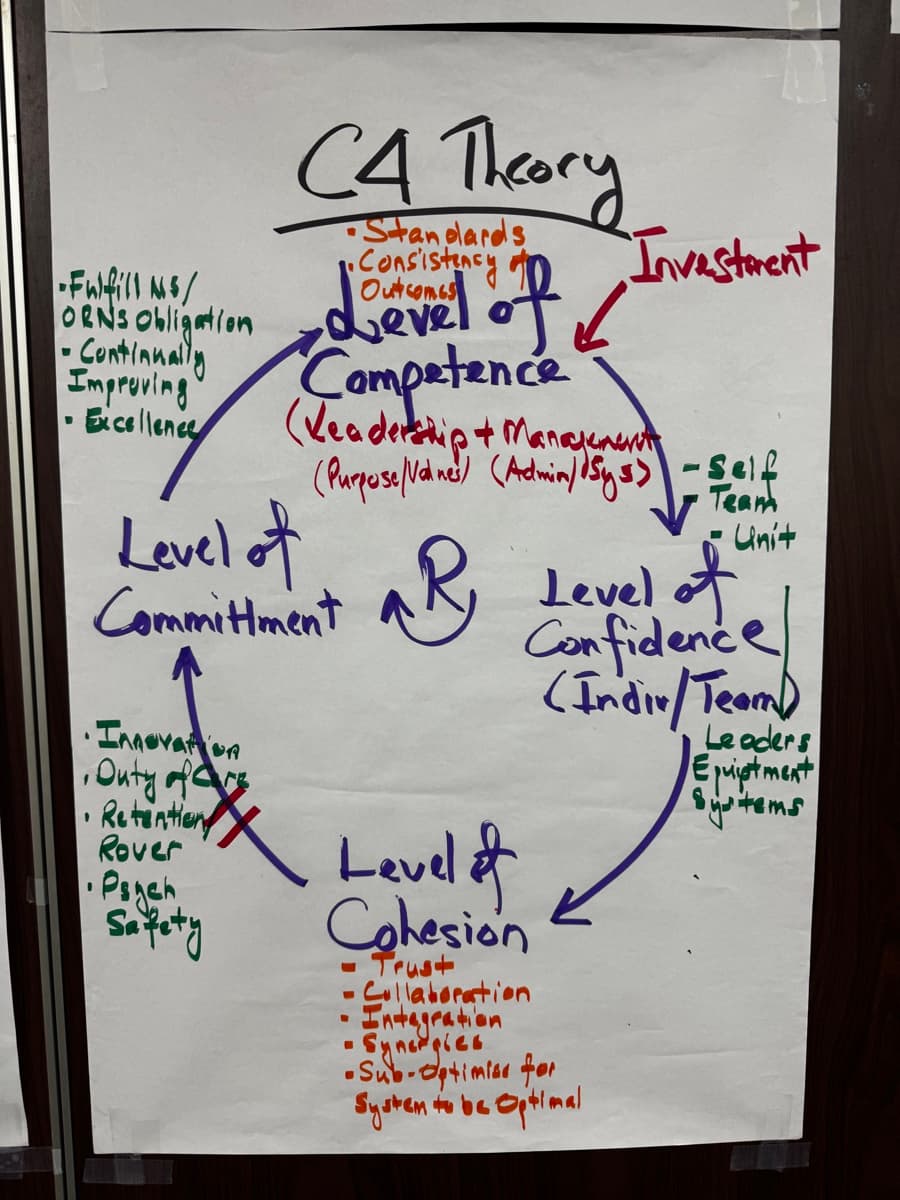
Competence builds the plan. Character is what lets you hold it or abandon it well. The two are distinct, and pressure exposes the gap between them. A highly competent leader can construct an excellent plan and then cling to it past the point of usefulness because they lack the character to let it go. A leader of strong character but thin competence will hold their nerve and lead people calmly in the wrong direction.
You need both, and they are developed differently. Competence comes from study and experience. Character comes from knowing what you value, having tested it, and being willing to act on it when acting costs you something. Under pressure, character is the deciding factor, because the plan rarely survives contact and what remains is the person making the next call.
Most leaders are never short of competence. What they lack is a setting in which to test the interior work: the self-knowledge, the separation of identity from role, the rehearsed judgement that holds when the plan does not. That is the work I do in executive coaching, and if it is the work you recognise in yourself, you can start a conversation here.