Business wargaming puts a leadership team inside a moving, adversarial situation and makes it decide, turn by turn, as the situation reacts. It rehearses judgement under pressure. Before you buy one in Singapore, apply four tests: the situation reacts, the debrief examines judgement, the scenario fits your world, and the facilitator has led under real pressure.
The method comes from the Prussian Kriegsspiel and is now used by militaries, intelligence agencies, and a handful of strategy consultancies. The label has spread faster than the discipline behind it, so the buyer's real task is telling the two apart. This guide is written to help you do that before you spend.
What is business wargaming, precisely?
A wargame is a structured decision game. A team is given a situation already in motion, with an opposing force or a moving market that responds to what they do. They decide, the situation reacts, and the consequences of the last choice arrive as the next one is due. Nobody knows the outcome in advance, which is the point, because judgement is the faculty you reach for when the outcome is not yet known.
That is what separates it from the training it is often confused with. A case study is an autopsy of a decision someone else already made. A role-play rehearses a conversation. A business-continuity tabletop walks a team through a documented plan. A wargame rehearses the deciding itself, under pressure, against something that pushes back. We set out the underlying mechanism in what is scenario-based leadership training.
How do you tell a real wargame from a branded workshop?
Four tests separate the discipline from the theatre:
- The situation reacts. If the scenario is fixed and the facilitator is just reading the next slide regardless of what the team does, it is a case study wearing a costume. A real wargame branches from the team's choices.
- The debrief examines judgement, not outcome. The value is not whether the team won. It is why they decided as they did, where alignment broke, and who filled the vacuum. A programme that scores the result and stops has missed the learning.
- The scenario fits your world. Generic scenarios build generic lessons. The pressure should be drawn from your business: a restructure, an operational failure, a public crisis, a succession gap. Not combat, not political theatre.
- The facilitation is credible. Running a decision under real pressure and debriefing it honestly is a craft. Ask what the facilitator has actually commanded or led under pressure, not just what frameworks they present.
What formats can you buy?
Most serious programmes come in three shapes. A single-session Decision Lab, half a day to a day, running one scenario with one team and one hard debrief. An intensive of two to three days, running an escalating scenario across the levels of leadership, which pairs naturally with a leadership retreat. And an embedded module, a scenario set inside a longer leadership development programme so the deciding is rehearsed alongside the rest of the work. You can see how these are built on the scenario-based leadership training page.
Who is it actually for?
Wargaming earns its place with teams that carry consequential decisions under uncertainty: executive committees, boards, and leadership groups heading into a restructure, a succession, a market shift, or the aftermath of a public failure. It is less useful as a generic team-building exercise. The sharper the real decision on the horizon, the more the rehearsal returns.
Can you buy business wargaming in Singapore?
Not easily, if you mean a locally rooted provider running leadership decision games rather than a global consultancy flying it in. We could not identify a Singapore-based firm offering Kriegsspiel-style wargaming built for corporate leadership teams. The recognised wargaming names have no visible Singapore presence, and the global consultancies deliver it as bespoke advisory rather than an open programme. The term tabletop exercise is common here, but it usually means a cyber or business-continuity drill, not a rehearsal of how a leadership team decides when the plan breaks. We map the wider landscape in the 2026 comparison of crisis leadership training in Singapore.
Men-Kind runs this method locally, drawn from more than two thousand operations in command and from doctoral research in crisis leadership at Cranfield University. Funding questions, including SkillsFuture, are covered in is leadership training SFEC-claimable.
What should you ask before buying?
Five questions settle most decisions. Does the situation react to what my team does? Does the debrief examine how we decided, not just whether we won? Is the scenario built from my business or pulled off a shelf? What has the facilitator led under real pressure? And what will my team be able to do on the Monday after that they could not do before? Clear answers to those five tell you whether you are buying the discipline or the costume.
How much does a business wargame cost in Singapore?
Men-Kind's facilitated decision games are scoped to the team and the scenario rather than charged at a day rate, with the fee set out in a written proposal. The global consultancies deliver wargaming as bespoke advisory rather than a priced open programme, so a locally scoped session is usually the faster and clearer route.
What experience should a wargame facilitator have?
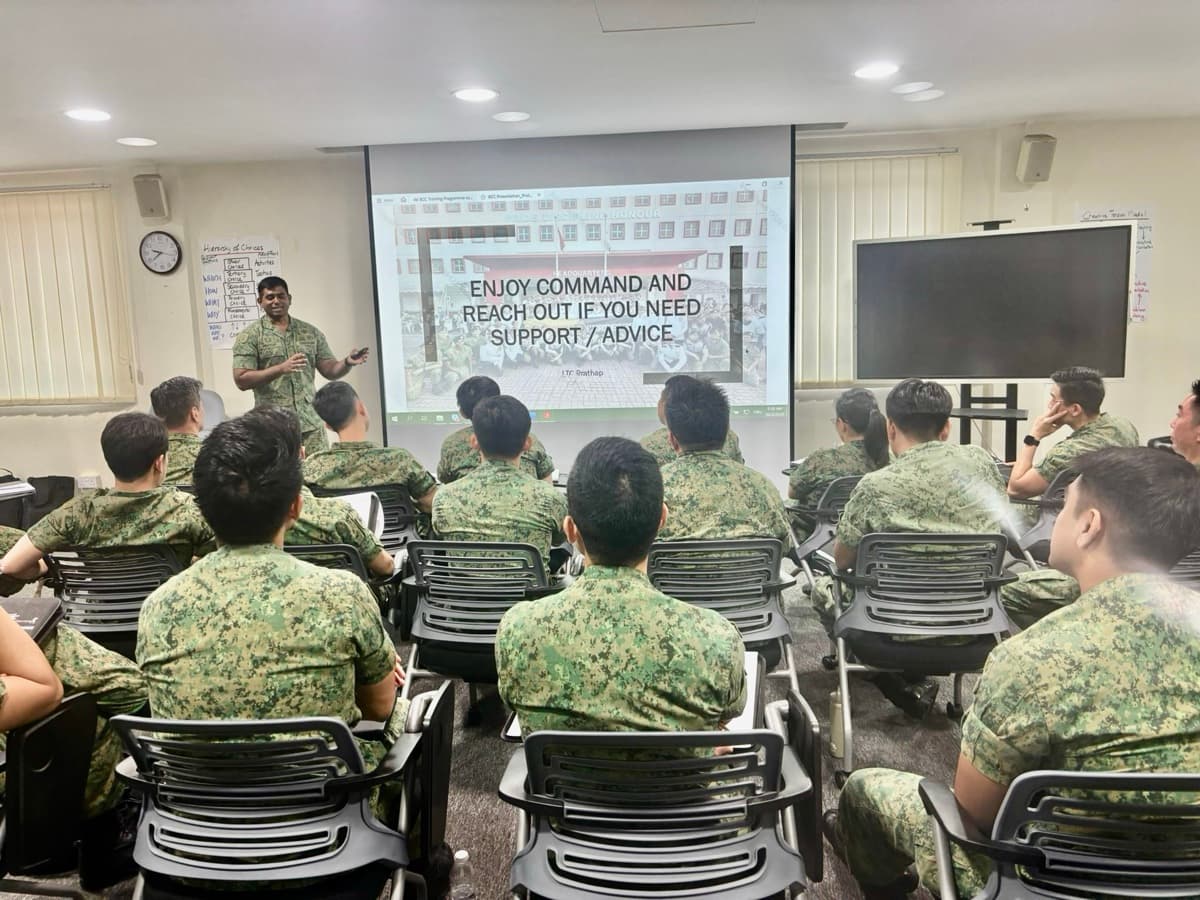
Command of real decisions under real pressure, and the craft to debrief judgement honestly. Ask what the facilitator has led before asking what frameworks they present. Men-Kind's wargames are designed and run by Paul Prathap, a former Battalion Commander in the Singapore Armed Forces with more than 2,000 operations in command, now researching crisis leadership at doctoral level at Cranfield University.
Is a business wargame a good fit for a leadership retreat?
Yes, the two pair naturally. A two to three-day intensive runs an escalating scenario across the levels of leadership, and a retreat gives it the time and distance a boardroom cannot. Men-Kind retreats are scoped on a Clarity Call, with the wargame built from your business rather than a generic scenario.
If the deciding is the capability you want to build, that is the work we do. Read more about scenario-based leadership training or request a proposal. Tell me the team and the pressure they are under. If anything needs clarifying, I reach out within 24 hours. Otherwise you get a written quote within 48 hours.