Scenario-based leadership training places a leader inside a realistic, deteriorating situation and requires them to make consequential decisions under time pressure, then debriefs the quality of their judgement rather than the result. It does not teach a leader what they should do. It shows them what they actually do when the information is incomplete, the clock is running, and being wrong has a cost.
That distinction is the whole game. Most leadership training rehearses the answer in calm conditions and hopes it survives contact with a bad day. Scenario-based training rehearses the bad day.
How is it different from a case study or a role-play?
A case study is an autopsy. You examine a decision someone else already made, the outcome known, nothing at stake. It builds analysis, not judgement, because judgement is what you reach for when the outcome is not yet known.
A role-play rehearses a conversation. Useful, but narrow. Scenario-based training rehearses a decision: under time, with imperfect information, with consequences that branch from what you choose. The situation moves whether or not you are ready. That pressure is not theatrical. It is the point, because pressure is the only condition under which a leader's real defaults show up.
Why does it work? The mechanism.
A plan, a framework, a playbook: all of them train recognition. You learn to recognise the situation the playbook was written for. The trouble is that real crises rarely match the page, and the better trained you are on the playbook, the longer you keep applying it after the ground has changed.
Scenario-based training builds the other muscle: adaptation, the act of deciding when the map no longer fits the terrain. This is why a leader can know every model and still freeze. Knowledge lives in the part of you that has time. Judgement lives in the part that does not.
Where it comes from
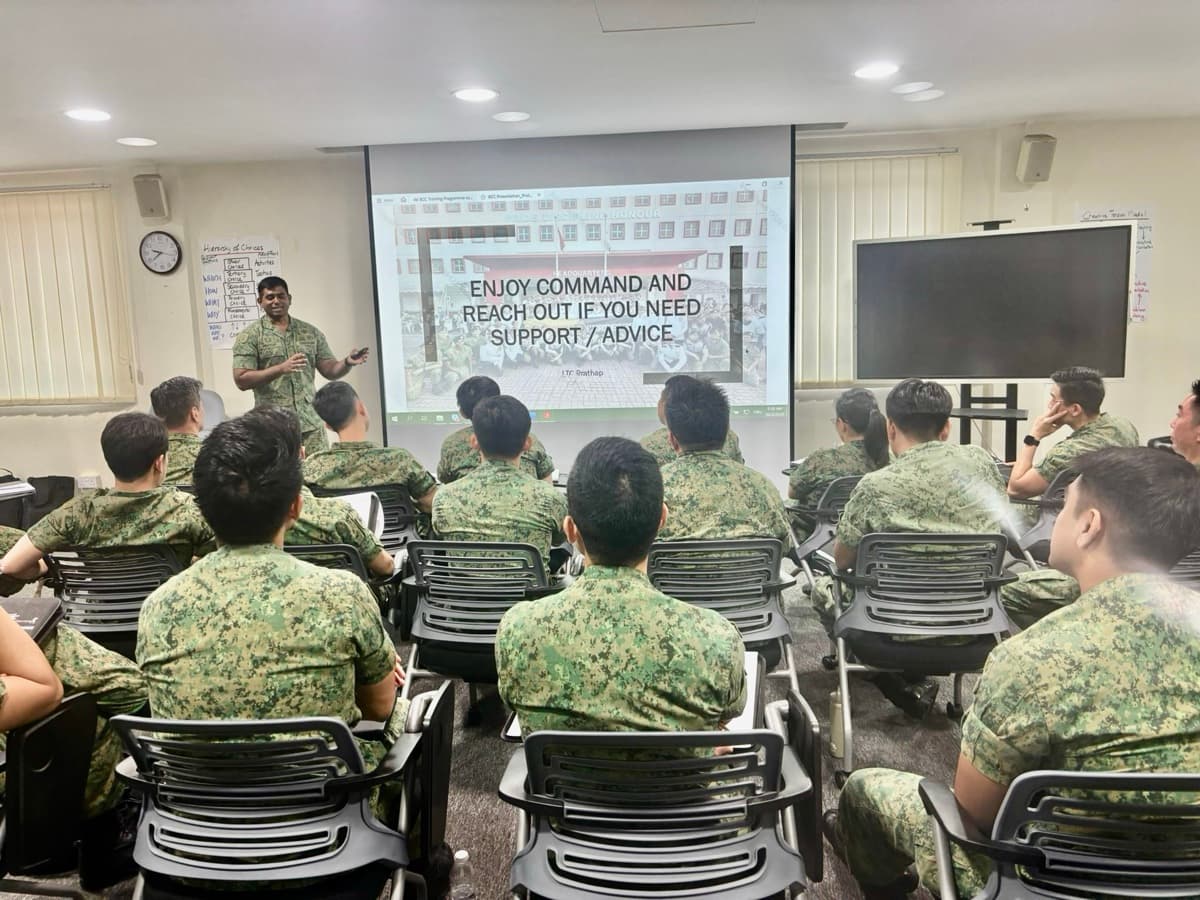
The method is not new. Militaries have used it for over two centuries, from the Prussian Kriegsspiel to the decision drills run in operations rooms today. Through more than two thousand operations in command, this was simply how leaders were made. You did not lecture a commander on pressure. You put them under it, in a controlled setting, again and again, until the deciding itself became familiar.
My doctoral research at Cranfield University examines exactly this: how leaders hold themselves and their teams together under acute pressure. Scenario-based leadership training is that question turned into a method an organisation can use.
What it looks like in practice
A scenario begins with a situation already in motion and already imperfect. A market move, an operational failure, a public crisis, a leadership vacuum. The team must act before they feel ready, because that is the real condition of command. As they decide, the situation responds. New information arrives, some of it wrong. The cost of yesterday's choice lands today.
The value is in the debrief, and the debrief is unusual. We do not ask whether the outcome was good. Outcomes are noisy. A poor decision can get lucky and a sound one can lose. We ask about the judgement. What you saw and what you missed. When you committed and when you should have. What the pressure did to you. That learning is invisible in any training that scores only the result.
Who is it for?
Senior teams who will, at some point, face a decision the playbook does not cover. If your people are excellent when conditions are stable and hesitant when they are not, the gap is not knowledge. It is rehearsal.
The one shift to make now
Before your next leadership offsite, ask a sharper question than what do we want people to learn. Ask what decision do we need them to be better at making when it actually counts. If the honest answer is a decision under pressure, no lecture will move it. Only rehearsal will.
This is the thinking behind Men-Kind's scenario-based leadership training and wider leadership development work. If you are responsible for how your leaders perform on the worst day, a thirty-minute conversation is the right first step. No pitch. Book one here.